
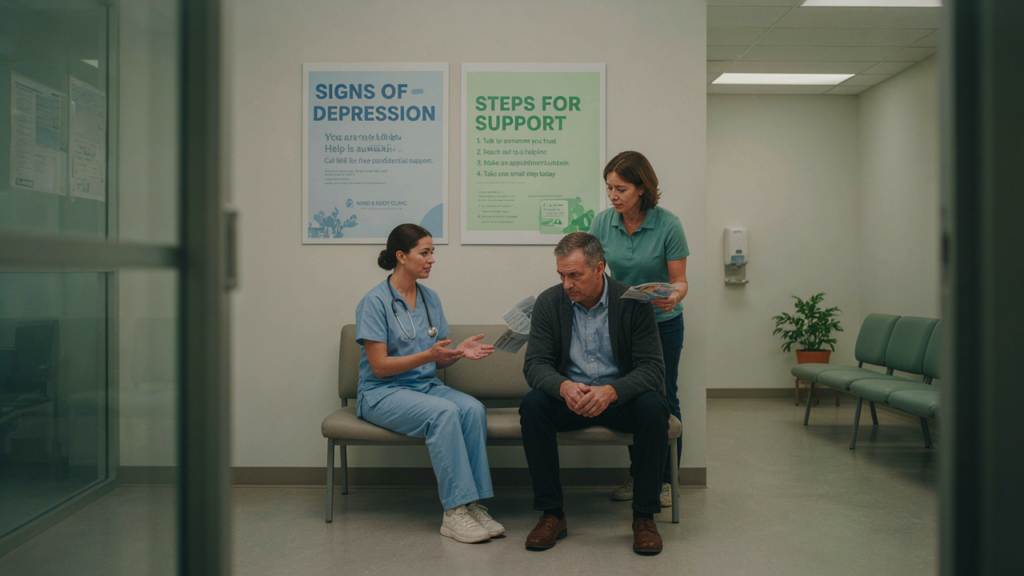
Mental Health Is Not Always Visible
One of the biggest challenges surrounding mental health is that emotional struggles are often invisible.
Someone can go to work every morning, answer messages, attend classes, laugh with friends and appear completely fine while privately dealing with anxiety, depression, grief or overwhelming stress.
This is one reason mental health can be difficult to recognize, both in ourselves and in others.
A person may start withdrawing from people they normally enjoy spending time with. They may lose interest in activities they once loved, struggle to concentrate, experience major changes in sleep or appetite, or constantly feel tired.
Sometimes the changes are subtle.
Sometimes the person simply keeps saying, “I’m fine.”
That is why mental health awareness matters. Understanding that emotional distress can look different from person to person makes it easier to respond with compassion instead of judgment.
Stress Is Part of Life, But Constant Distress Should Not Be Ignored
Everyone experiences stress.
Deadlines, financial problems, relationship difficulties, family responsibilities, academic pressure and uncertainty about the future can all affect our emotional wellbeing.
Stress itself is not necessarily a mental disorder. The concern arises when difficult feelings become persistent, overwhelming or begin interfering significantly with everyday life.
Anxiety disorders, for example, involve fear or worry that can become excessive, difficult to control and disruptive to everyday activities.
Depression can also be much more than simply feeling sad after a difficult day. It can involve persistent low mood or loss of interest and can affect relationships, work, education and everyday functioning.
Recognizing the difference does not mean diagnosing yourself. It means recognizing when something deserves attention.
Looking After Your Mental Health Does Not Have to Be Complicated
Mental wellbeing is influenced by many different factors, including biological, psychological, social and environmental circumstances. That means there is no single solution that works for everyone.
Still, some everyday habits can support better mental wellbeing.
Staying connected with people you trust can make a meaningful difference. Talking to a friend, family member, colleague or another trusted person can make difficult experiences feel less isolating.
Physical activity can also support wellbeing. It does not have to mean an intense workout. A walk outside, regular movement or spending some time in nature can be a useful part of a healthier routine.
Sleep matters too. So do regular meals, meaningful activities and finding healthier ways to manage stress.
WHO also identifies staying connected, physical activity, healthy routines, meaningful activities and seeking support when needed as important ways of protecting mental wellbeing.
These things are not replacements for professional care when someone needs it. They are simply parts of looking after ourselves.
Asking for Help Is Not a Failure
Perhaps one of the most damaging ideas surrounding mental health is that asking for help means someone is incapable of handling life.
The opposite can be true.
Recognizing that something is wrong and deciding to talk about it can take considerable courage.
Professional mental health support can include different forms of psychological treatment, counselling and, when appropriate, medication. Many mental health conditions can be effectively treated, although access to quality care remains a major challenge around the world.
There is also no requirement to wait until everything becomes unbearable before asking for help.
Sometimes the best time to reach out is when you first notice that something has changed.
We Also Need to Change How We Talk About Mental Health
Mental health awareness cannot simply mean posting motivational messages once a year.
It means creating environments where people can speak honestly without immediately being labelled, dismissed or judged.
Instead of saying, “Just be positive,” we can ask, “Do you want to talk about what’s going on?”
Instead of telling someone to “get over it,” we can listen.
Instead of assuming someone is weak because they are struggling, we can remember that difficult circumstances can affect anyone.
Social connection is particularly important. WHO notes that meaningful connection influences mental, physical and brain health, while loneliness and social isolation represent forms of social disconnection.
Sometimes being heard does not immediately solve a problem.
But being heard can be the beginning of no longer carrying everything alone.
When It Is Time to Take Things Seriously
If emotional difficulties persist, become increasingly intense or begin affecting relationships, work, education, sleep or everyday functioning, it is worth speaking with a qualified healthcare or mental health professional.
And when someone is experiencing thoughts of suicide or self-harm, those thoughts should always be taken seriously. WHO recommends talking to someone trusted and seeking support from a health professional, crisis service or emergency service when there is immediate danger.
Mental health support should never be treated as something embarrassing or reserved for people who have “lost control.”
It is healthcare.
A Healthier Conversation Starts With Us
Mental health is not something we should only discuss when someone reaches a breaking point.
It belongs in conversations at home, in schools, workplaces, communities and friendships.
We can learn to notice changes in ourselves. We can check in on people we care about. We can make room for difficult conversations. We can listen without immediately trying to fix everything.
And perhaps most importantly, we can stop measuring someone’s pain by how normal they look from the outside.
Taking care of your mind is not selfish. Talking about what you are going through is not weakness. Asking for support is not failure.
Sometimes taking care of your mental health begins with something very simple:
Admitting that you are not okay.
And allowing yourself to say it out loud.
